
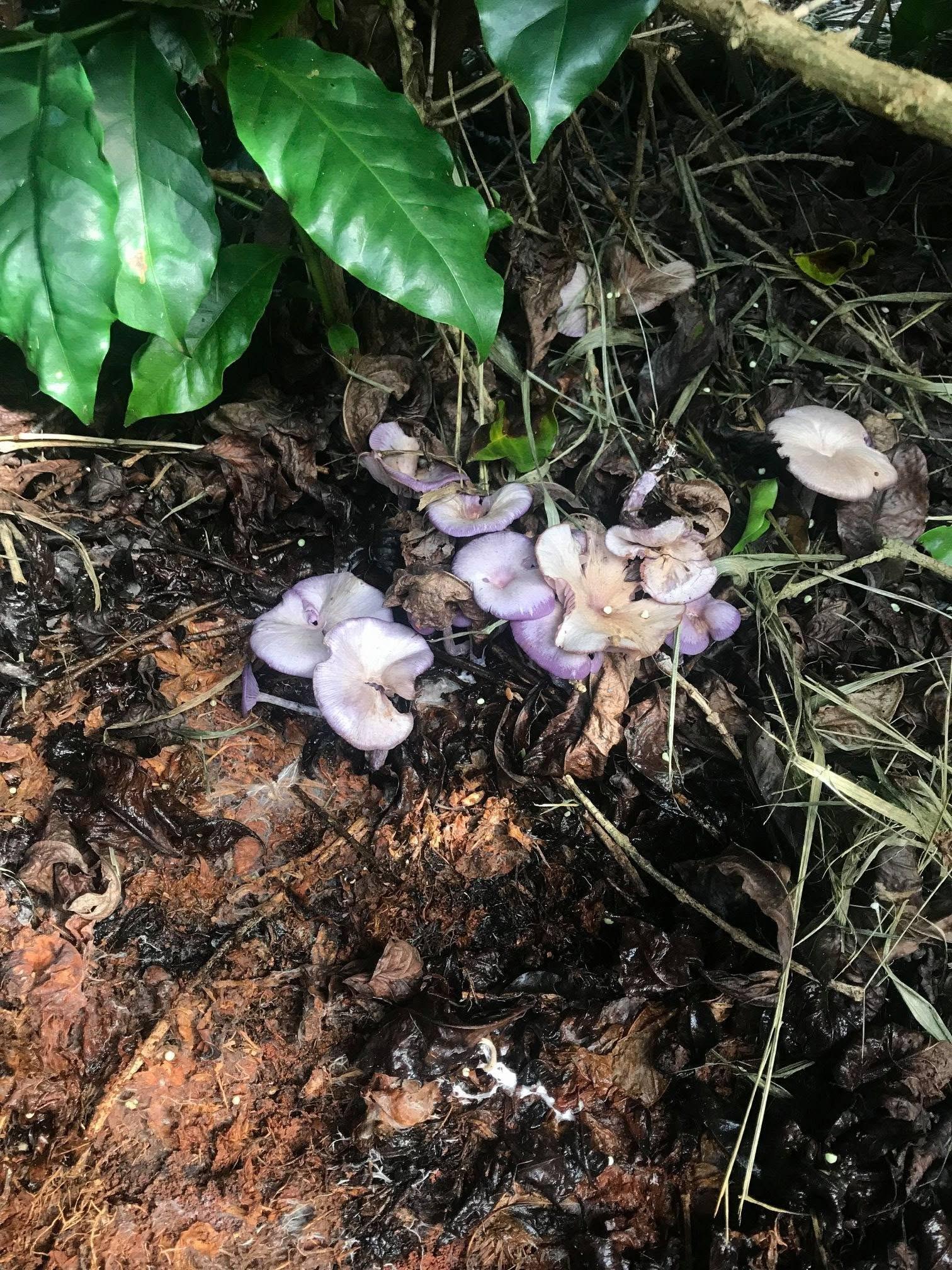
Brachiaria system
Brachiaria in the inter-row and living soil: a crop that needs far less chemical fertilizer.
- of brachiaria mulch per hectare each year, mowed under the coffee trees
- 12 to 21 t
- savings on fertilizer, compared with conventional farming
- 75%
- thick layer of mulch and roots under the coffee tree's skirt
- 20 cm
- is the only period with herbicide, just to establish the grass in a new planting
- 30 months
of brachiaria mulch per hectare each year, mowed under the coffee trees
savings on fertilizer, compared with conventional farming
thick layer of mulch and roots under the coffee tree's skirt
is the only period with herbicide, just to establish the grass in a new planting
Grass in the inter-row, mulch over the roots
In conventional farming
- Inter-row kept bare, by hoeing or with herbicide
- Soil exposed to sun, heavy rain and erosion
- Nutrition dependent on chemical fertilizer
At Fazenda Movimento
- Brachiaria fills the inter-row on purpose, with deep roots
- Mowing turns into mulch thrown under the coffee tree's skirt, where the roots are
- Inoculated fungi and microorganisms turn the mulch into organic fertilizer
1
Grass grows between the rows
Between the rows of coffee, brachiaria grows freely and covers the ground all year.
2
Mowing turns into mulch
The mower cuts the grass and throws the straw under the coffee tree's skirt, over the roots.
3
The soil stays alive
Fungi and microorganisms turn the straw into fertilizer, and the covered soil holds water through the dry season.
Less fertilizer, fewer pesticides
This is what sets Fazenda Movimento apart. When the soil works for the plant, much of what would come from the fertilizer bag and the sprayer comes from the crop itself.
- 01
Inoculate
Beneficial fungi and microorganisms are inoculated and encouraged in the soil.
- 02
Activate the flora
Soil life multiplies on the brachiaria mulch, under the coffee tree's skirt.
- 03
Become fertilizer
The mulch breaks down and returns to the roots as nutrients and organic fertilizer.
- 04
Depend less
The need for chemical fertilizer and pesticides drops substantially.
What changes in the soil and in the crop
Life in the soil
Inoculated and encouraged fungi and microorganisms activate the soil flora and turn the mulch into nutrients and organic fertilizer.
Less fertilizer and fewer pesticides
With active soil, the crop needs far less chemical fertilizer and pesticides. In the oldest areas of the system, no herbicide is needed.
Soil covered all year
The mulch protects the land from sun and heavy rain, and prevents erosion on the slopes.
Water held in
The soil stays moist under the skirt even during a summer dry spell, without irrigation.
Deeper roots
Brachiaria roots open channels in the soil and help loosen it.
Carbon in the soil
The mass of mulch that builds up raises fertility and carbon sequestration in the soil.
Tested by drought
In the 2014 summer dry spell, a Minas Rural report noted: “this crop is hardly feeling this harsh drought at all”.
Regenerative agriculture
In 2018, after ten years of coffee, the farm began calling its approach regenerative agriculture. The difference from the idea of sustainability lies in the verb: to sustain is to keep what already exists; to regenerate is to use the farm itself to build the soil and leave it healthier than before.
The idea is old. In the 1940s, on a farm in Emmaus, Pennsylvania, J. I. Rodale tested organic methods and summed up what he learned in a motto: healthy soil, healthy food, healthy people. In 1947 he founded the Soil and Health Foundation, later renamed the Rodale Institute. Varieties that better withstand the climate, like those developed by World Coffee Research, help, but they only reach their potential with care for the soil.
Healthy soil also keeps more clean water for the people living downstream and shelters more life, above and below ground. At Fazenda Movimento, brachiaria is how this idea is put into practice.
Healthy soil = higher-quality coffee = robust supply chains and thriving farmers
Who keeps the pests in check
With few pesticides, life returns to the field. Natural enemies help control pests, and every creature has its role, from the flowers to the ground.
“In a balanced environment, natural enemies keep populations of insects and pathogens well under control.”
The system in numbers
Measured on the farm itself and published by Agro DBO magazine in 2017.
- of brachiaria mulch per hectare each year, mowed under the coffee trees
- 12 to 21 t
- savings on fertilizer, compared with conventional farming
- 75%
- thick layer of mulch and roots under the coffee tree's skirt
- 20 cm
- is the only period with herbicide, just to establish the grass in a new planting
- 30 months
- of the coffee falls to the ground and feeds the soil, without harboring the coffee berry borer (UFLA estimate)
- 8 to 10%
- of 55 hp, burning three liters of diesel an hour, does almost all the fieldwork: the mowing
- 1 tractor
of brachiaria mulch per hectare each year, mowed under the coffee trees
savings on fertilizer, compared with conventional farming
thick layer of mulch and roots under the coffee tree's skirt
is the only period with herbicide, just to establish the grass in a new planting
of the coffee falls to the ground and feeds the soil, without harboring the coffee berry borer (UFLA estimate)
of 55 hp, burning three liters of diesel an hour, does almost all the fieldwork: the mowing
“With the soil microbiota as an ally, I spend little on pesticides and fertilizers.”
From doubted to a reference
“In the early years the model was heavily criticized, but coffee grower Luiz Fernando stood firm in his vision. [...] Fazenda Movimento was the reference in the “Movement” of the Healthy Soils Program.”
2007
Luiz Fernando decides to trade potatoes for coffee and visits farms in Minas Gerais, Bahia and Espírito Santo to study intercropping with brachiaria. In December, the first seedlings go into the field.
2009
Fazenda Movimento's first coffee harvest.
2012
Emater-MG begins working with cover crops in partnership with the farm, which becomes a reference for the program.
2014
During the summer dry spell of January and February, the intercropped coffee keeps sprouting in moist soil. The story airs on the Minas Rural program.
2017
Agro DBO magazine calls the approach a “winning system”: brachiaria mulch under the coffee trees, almost no pesticides and 75% savings on fertilizer.
2018
“10 years practicing regenerative agriculture in coffee”: the farm begins presenting its approach as regenerative agriculture, which leaves the soil healthier than before.
2019
Embrapa publishes that brachiaria, “once shunned”, has become an ally of coffee growing. The farm sums it up: an ally today.
2020
Groups of growers and agronomists visit the farm to see the approach up close.
2022
Recognition for work “that I started with many people doubting me”, in Luiz Fernando's words.
Research in the field
Fazenda Movimento's coffee fields are also a place of study. Professor Fábio Moreira, of the Federal University of Lavras (UFLA), a specialist in mechanization, follows the harvest: he estimated that 8% to 10% of the coffee stays on the ground, where it only feeds soil life. UFLA students visit the farm to see the approach up close.
Growers and technicians have also seen the system up close, on field days and technical visits, from the inter-row to the drying patio.
Sources and documents
The figures and quotes on this page come from these documents. They are here for anyone who wants to check.
- “Sistema vencedor” (“Winning system”), Agro DBO magazineArticle by Rogério F. Furtado, April 2017, pp. 34–37. Source of the farming and post-harvest figures.PDF, 1.3 MB
- Cover crop guide, Emater-MGGuide to growing cover crops in agricultural production systems, with Fazenda Movimento as a reference.Emater-MG website
- Semana Internacional do Café score sheet, 2014Cupping by Academia do Café (Belo Horizonte), with a score of 83.13 points.Image, JPG
- Emater-MG and UFLA contest results, 201310th Minas Gerais State Coffee Quality Contest: 1st place Pulped Natural, southern Minas Gerais.UFLA website
- Minas Rural program, episode 932April 2014 report on the switch to coffee and the crop during the drought.Video, YouTube
- “The Time to Regenerate Coffee is Now, and it Starts with Healthy Soil”, Daily Coffee NewsArticle by Hugh Aprile (CRS), April 20, 2018, shared by the farm. Source of the idea of regenerative coffee and of the motto adapted to coffee.Daily Coffee News website
- Rodale InstituteThe institute's story: the Emmaus farm (1940), the founding of the Soil and Health Foundation (1947) and the motto “healthy soil, healthy food, healthy people”.Rodale Institute website
In the grower's words
“A satisfaction and a recognition of work that I started with many people doubting me. But today I receive praise and proof that I took part in the change toward better coffee growing.”